

There’s a specific kind of exhaustion that creeps in around midnight.
Not the dramatic kind. Not the cinematic collapse. Just the dull hum of fluorescent light, an empty mug with cold coffee stuck to the rim, and a quiet apartment that somehow still feels loud. My desk lamp was flickering again that night. Cheap switch. Plastic click. The kind you buy without thinking.
That sound.
Click.
Nothing.
Click again.
Still nothing.
I remember staring at that stupid light switch longer than any rational adult should. Twelve hours of work behind me. Spreadsheet fatigue. The vague shame of another day spent producing things no one will remember in a year.
And the thing that broke me wasn’t the work.
It was that switch.
Cheap plastic. Worn edges. A miserable little object I had touched a thousand times without ever noticing it.
You’d think a light switch wouldn’t matter.
But that night it did.
The Lie of Convenience
Somewhere along the way, we accepted a quiet deal.
Convenience in exchange for dignity.
Look around most modern homes and you’ll see it everywhere. White plastic switches. Hollow door handles. Drawer pulls that feel like they came out of a cereal box. Functional. Cheap. Invisible.
And that’s the point.
Modern design culture trains us to ignore the objects we interact with the most.
The things you touch every day are the things corporations want you to stop noticing.
Because the moment you notice… you start asking questions.
Why does this feel cheap?
Why does everything break after three years?
Why does my house feel like it was assembled from disposable parts?
Once you see it, you can’t unsee it.
The small details shape the mood of your life far more than the big purchases.
A sofa? You sit on it sometimes.
But a light switch?
You touch it every day. Sometimes dozens of times.
It’s the handshake between you and your home.
And for years, I had been shaking hands with plastic.
The Accidental Discovery
The discovery wasn’t elegant.
It came during one of those late-night internet spirals where you start looking for a replacement light switch and somehow end up reading about architectural hardware like a lunatic.
That’s when I stumbled across this London brand.
Not a lifestyle brand. Not the usual Instagram furniture nonsense.
Something different.
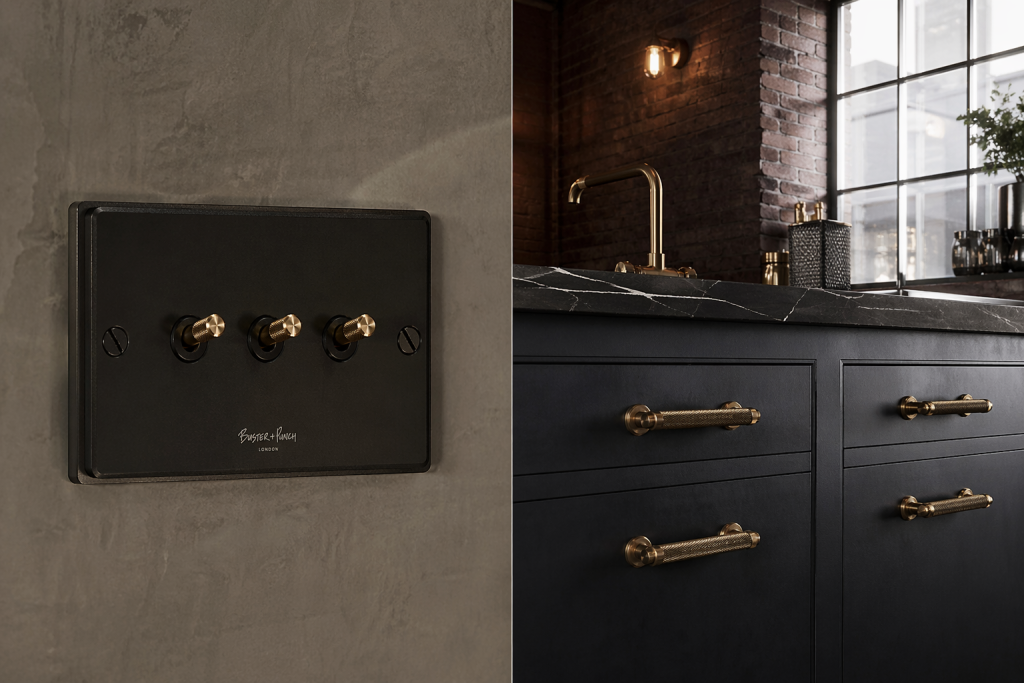
Buster + Punch
A company founded by an architect who apparently spent nights building custom motorcycles in a garage in East London before turning his obsession with metalwork into a design studio.
That origin story already had my attention.
Motorcycles. Metal. Architecture.
Not exactly the typical background for door handles and light switches.
But the philosophy was the real hook.
They weren’t trying to sell décor.
They were redesigning the objects people touch every day.
Light switches. Cabinet handles. dimmers. fixtures.
And they were making them out of solid metal.
Brass. Steel. Bronze.
The stuff that actually ages.
The stuff that develops character.
Not the kind that flakes off in three years.
The kind that gets better.
Choosing Weight Over Convenience
There’s a strange moment when you pick up something well made.
You notice the weight first.
Real metal doesn’t pretend.
You feel it immediately.
That’s exactly what happened when the first package arrived.
The box itself wasn’t flashy. No marketing circus. Just clean packaging and a quiet sense that someone cared about what was inside.
I opened it slowly.
Inside was a light switch plate.
Brass.
Knurled grip pattern — the kind you usually see on motorcycle handlebars. Turns out that detail is deliberate; the brand borrowed textures from motorbike engineering and industrial metalwork.
It felt… serious.
That’s the only word that comes to mind.
Serious metal.
I held it in my hand longer than necessary, turning it in the light.
The edges were sharp in the good way. Precision sharp. The way machined objects feel when they haven’t been softened for mass production.
And then I installed it.
Five minutes later, I flicked the switch.
Click.
Not plastic.
Metal.
The sound was deeper. Mechanical. Almost ceremonial.
For the first time in years, turning on a light felt intentional.
The Ritual of Touch
This is the strange part people underestimate.
You don’t buy objects like this because they’re “luxury.”
You buy them because they change the rhythm of your day.
The morning coffee light switch.
The kitchen cabinet pull.
The bedroom dimmer before sleep.
These are micro-interactions.
Tiny rituals.
And suddenly those moments feel… deliberate.
That’s what good design does.
It slows the world down half a second.
And that half-second adds up.
I started noticing things.
The cool feel of brass in the morning.
The way the knurling catches your fingers.
The weight when you turn a dimmer slowly instead of slapping a plastic switch.
It’s tactile design.
Which is rare now.
Because most modern products are designed to disappear.
A House Is a Collection of Handshakes
Architecture people understand this instinctively.
The most important objects in a home are the ones you touch.
Door handles.
Switches.
Cabinet pulls.
The handshake points of a space.
And most homes treat those details like an afterthought.
That’s the gap Buster + Punch stepped into when it launched in 2013, turning everyday fittings into statement pieces crafted from solid metals.
What fascinated me wasn’t just the products.
It was the mindset.
This wasn’t décor.
It was engineering disguised as design.
Their catalog reads like a mechanical love letter to ordinary life.
Light switches.
Door stops.
Pull handles.
Bulbs.
All built like someone expected them to last decades.
That idea alone feels rebellious now.
Craftsmanship as Rebellion
Here’s the thing about craftsmanship.
It’s slow.
Which is exactly why modern industry abandoned it.
Fast products scale better.
Plastic is cheaper than brass.
Stamped metal is cheaper than machined metal.
Disposable is cheaper than permanent.
But the problem with cheap objects is psychological.
You treat them like they’re temporary.
And when everything around you feels temporary…
Life starts to feel that way too.
Solid materials anchor a space.
They tell your brain: this is meant to stay.
That’s why old houses feel calmer than new ones.
Stone.
Wood.
Metal.
Weight.
You feel it subconsciously.
The Moment I Realised Something Had Changed
A few weeks after installing the first switch, I noticed something strange.
I had stopped slapping the lights on.
Instead I would press them.
Slowly.
Not because I was trying to be fancy.
But because the mechanism invited it.
That’s what good design does.
It changes behaviour.
The same way a good pen makes you want to write.
Or a heavy glass makes you sip instead of gulp.
Design nudges us.
Quietly.
Without lectures.
The Quiet Upgrade Philosophy
Most people think upgrading a home requires a renovation.
It doesn’t.
Sometimes it’s the smallest objects that shift the entire atmosphere.
Replace the cheap things.
The ones your hands meet daily.
Switches.
Handles.
Lighting hardware.
Those pieces define the sensory experience of your space.
And once you feel the difference, it becomes hard to go back.
Plastic suddenly feels… dishonest.
Like costume jewellery.
The Defiant Choice
Look, none of this is essential.
You can absolutely live your life flipping plastic switches forever.
Most people do.
But if you care about the details of living — the tactile experience of your own home — then those small upgrades become strangely meaningful.
They remind you that life isn’t just about speed and convenience.
Sometimes it’s about friction.
Weight.
Texture.
Presence.
The world keeps pushing us toward disposable everything.
Choosing well-made objects is a quiet act of rebellion.
A small refusal.
A way of saying: I’d rather live with things that were built to matter.